Why Learning a Musical Instrument Is Worth It in 2026
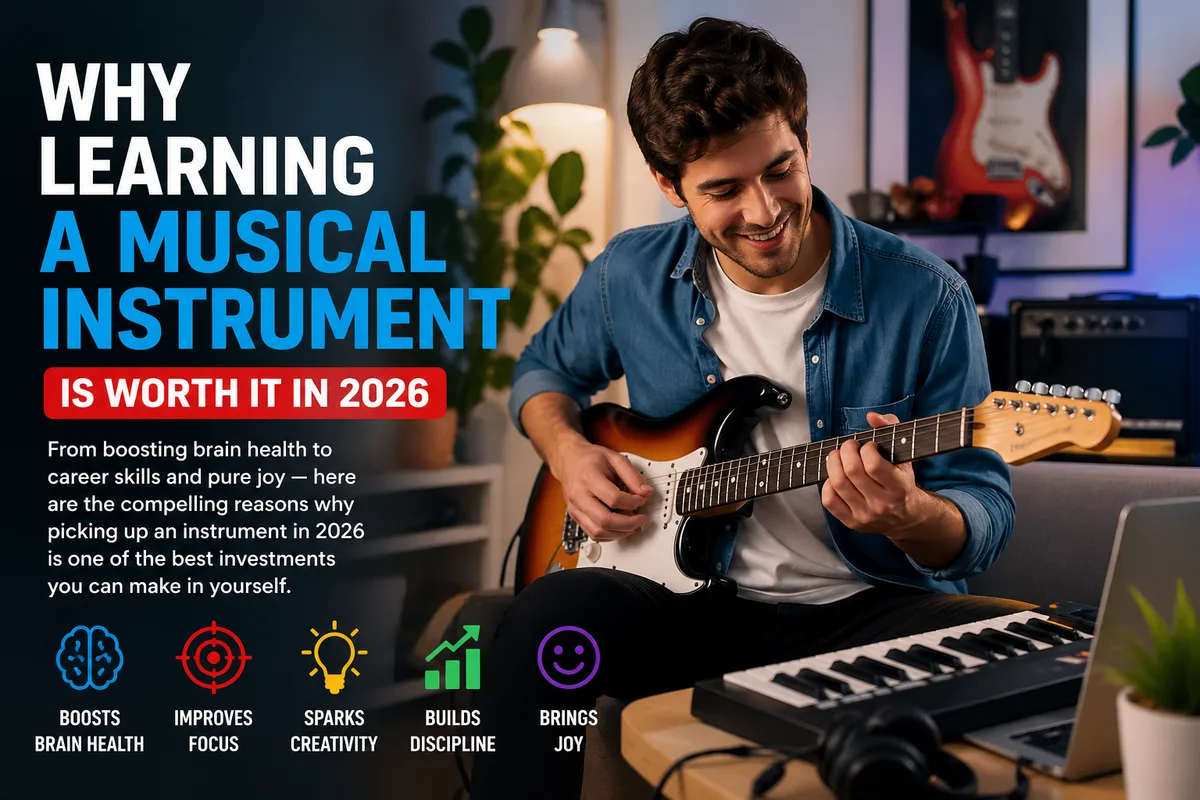
From boosting brain health to career skills and pure joy — here are the compelling reasons why picking up an instrument in 2026 is one of the best investments you can make in yourself.
Why Learning a Musical Instrument Is Worth It in 2026
Learning a musical instrument is one of those life decisions that keeps paying dividends long after the initial awkward first notes. In 2026, with the surge in online learning platforms, AI-powered tutors, and affordable gear, the barriers to entry have never been lower — and the science behind the benefits has never been stronger.
Whether you're a complete beginner eyeing your first acoustic guitar or a returning player considering picking up the piano again, here's why right now is the best time to start.
1. The Science-Backed Brain Benefits Are Undeniable
Multiple large-scale studies from 2023–2025 have reinforced what neuroscientists have known for decades: playing music literally rewires your brain.
Learning an instrument simultaneously engages the visual, auditory, and motor cortex. The result? Enhanced memory, sharper attention, and improved executive function. A 2024 study published in Nature Human Behaviour found that adults who learned an instrument for just 12 weeks showed measurable improvements in working memory and processing speed.
For older adults, the benefits are even more striking. Regular musical practice has been linked to a 30–40% reduction in cognitive decline risk, making it one of the most potent non-pharmaceutical interventions for brain health.
Key takeaway: You're not just learning a hobby — you're investing in your long-term cognitive health.
2. Emotional Wellbeing and Stress Relief
2025 mental health data from the UK's Mental Health Foundation showed that people who play a musical instrument report significantly lower levels of anxiety and depression compared to non-musicians.
Why? Music-making triggers the release of dopamine, serotonin, and oxytocin — the brain's natural feel-good chemicals. Even practicing alone produces measurable stress reduction. Playing in a band or ensemble adds a powerful social dimension, helping to combat loneliness.
In a post-pandemic world where mental health challenges are widespread, having an instrument at home provides:
- A screen-free creative outlet that grounds you in the present moment
- A sense of achievement and progression (especially important in stressful careers)
- A portable therapy tool — even 15 minutes of playing can shift your mood
3. Skills That Transfer Across Every Area of Life
Learning an instrument isn't just about music. The disciplines involved — consistent practice, delayed gratification, fine motor control, pattern recognition, and performance under pressure — are exactly the soft skills employers prize most.
A 2024 LinkedIn Workforce Report found that former musicians are disproportionately represented in roles requiring creativity, project management, and leadership. The habit of breaking a complex piece into manageable sections and iterating until it's mastered is essentially the same skill set used in software development, writing, and entrepreneurship.
What you actually learn:
- Focus — sustained attention during structured practice
- Resilience — handling failure gracefully (everyone plays bum notes)
- Collaboration — playing with others teaches listening and timing
- Discipline — incremental daily improvement compounding over time
4. 2026's Learning Landscape Makes It Easier Than Ever
Ten years ago, learning guitar meant either expensive lessons, grainy YouTube videos, or thick textbooks. In 2026, the ecosystem around musical learning is extraordinary:
AI-Powered Tutors
Apps like Yousician, Simply Piano, and Flowkey now feature AI that listens to your playing in real time, identifies mistakes, and adapts the lesson to your pace. It's the closest thing to a one-on-one teacher at a fraction of the cost.
Hybrid Online/In-Person Lessons
Most professional music teachers now offer flexible hybrid models — online for theory and remote feedback, in-person for technique refinement. This flexibility removes geographical barriers and reduces cost.
Affordable, Quality Gear
The used and refurbished instrument market has expanded dramatically. Sites like GearDeals aggregate listings from multiple retailers, making it straightforward to find quality instruments — guitars, keyboards, drums, and more — at genuinely competitive prices. You don't need to spend a fortune to start with something decent.
Community Platforms
Reddit communities (r/guitar, r/learnpiano), Discord servers, and TikTok have created global communities of learners. Sharing your progress — even early struggles — accelerates motivation and keeps beginners on track.
5. The Best Instrument for You in 2026
There's no single "best" instrument, but here's a quick guide:
| Goal | Recommended Instrument |
|---|---|
| Quick wins & songwriting | Ukulele or Guitar (acoustic) |
| Classical foundations | Piano / Keyboard |
| Band & social playing | Drums or Bass Guitar |
| Solo performance & portability | Classical or Fingerstyle Guitar |
| Childhood dream | Whatever you always wanted |
The last point matters most. Intrinsic motivation — playing because you want to — is the single biggest predictor of whether someone sticks with an instrument. Start with what excites you, not what seems most "practical."
6. The Economic Case: Gear Is a Long-Term Asset
Unlike gym memberships that go unused, a quality instrument holds value. A well-maintained acoustic guitar bought second-hand for £150 today can sell for the same or more in five years. Pianos, vintage synthesisers, and quality orchestral instruments have actually appreciated in value over the last decade as supply tightened.
In an era of subscription fatigue — where entertainment costs mount monthly — a one-time instrument purchase offers infinite hours of engagement with no recurring fees.
7. It's Never Too Late (Really)
One of the most persistent myths is that adults can't learn instruments effectively. The research is unambiguous: adults are often better learners than children in the early stages.
Adults bring:
- Context and pattern recognition that accelerates music theory
- Deliberate practice habits (children often rely on rote repetition)
- Clear motivation — adult learners choose to be there
Late starters like the painter Anna Mary Robertson Moses ("Grandma Moses") didn't pick up painting until her 70s. In music, amateur musicians who started in their 40s and 50s frequently reach advanced levels within three to five years of consistent practice.
Getting Started: A Practical 2026 Action Plan
- Decide your instrument — spend 20 minutes on YouTube watching people play it. If it still excites you, that's your answer.
- Set a realistic budget — for most instruments, £100–£300 gets you a genuinely playable beginner setup.
- Find a starting course — Coursera, Skillshare, and YouTube offer structured beginner courses for free or near-free.
- Schedule 20 minutes daily — consistency matters far more than session length in the early months.
- Compare prices before buying — use GearDeals to find the best current price across multiple UK retailers and save money on your first purchase.
- Track progress — record yourself monthly. You'll be astonished at how quickly things improve.
The Bottom Line
In 2026, learning a musical instrument offers a rare combination: scientifically proven cognitive and emotional benefits, transferable life skills, a global community of learners, and better access to affordable gear than ever before. The only real cost is time — and the returns on that investment last a lifetime.
Whatever your age, background, or musical experience, there has never been a better moment to start.
Browse the best prices on guitars, keyboards, drums and more at GearDeals.co.uk — real-time price comparison across UK retailers.